Pest Control Service Culver City provides definitive structural defense, eliminating active infestations and blocking reentry points across Los Angeles County properties. Structural vulnerabilities near coastal channels require systematic inspection, targeted eradication, and mechanical sealing rather than superficial spray applications.
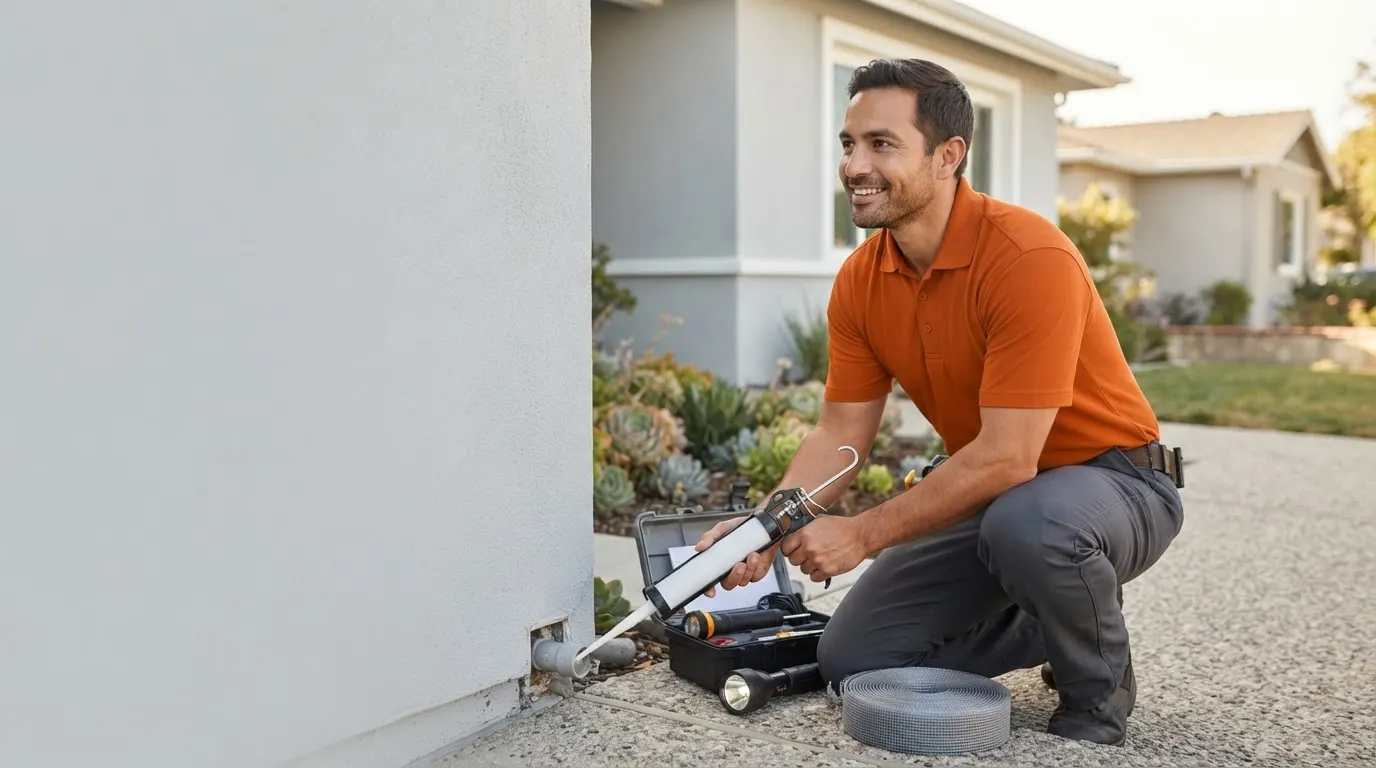
Pest Control Service company in Culver City is a professional structural remediation and perimeter defense operation that isolates, eliminates, and mechanically excludes invasive insects and rodents from residential and commercial structures.
Every service reflects the same meticulous attention to detail, whether it's a single job or a larger pest control service project across Culver City.
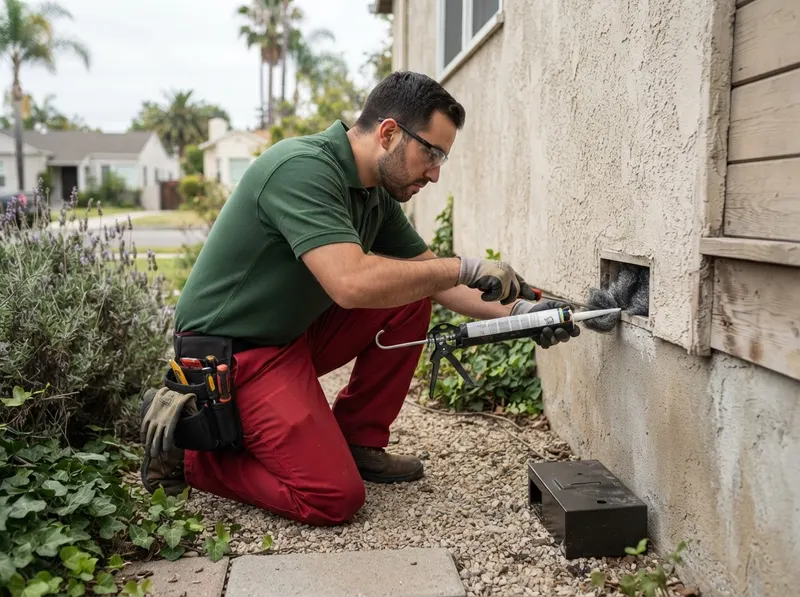
Full structural inspection to locate rodent entry gaps down to one-quarter inch along exterior foundations, rooflines, and crawl space subfloors. Technicians install high-gauge galvanized wire mesh, seal pipe collars, and extract existing roof rat populations using mechanical interior capture arrays. Sanitation protocols remove soiled insulation, biohazard droppings, and pheromone trails to prevent future target attraction. Specialized mastic and stainless steel mesh secure foundation crawl space doors, stucco expansion joints, and corner fascia caps where roof rats exploit tree canopies to bypass ground defenses. Comprehensive remediation includes attic void fogging with enzyme-based sanitizers that neutralize ectoparasites such as rodent mites, fleas, and pathogenic airborne particles. Monitoring stations track exterior runways along property fences to prevent secondary populations from re-colonizing perimeter landscape margins.
Get a quote →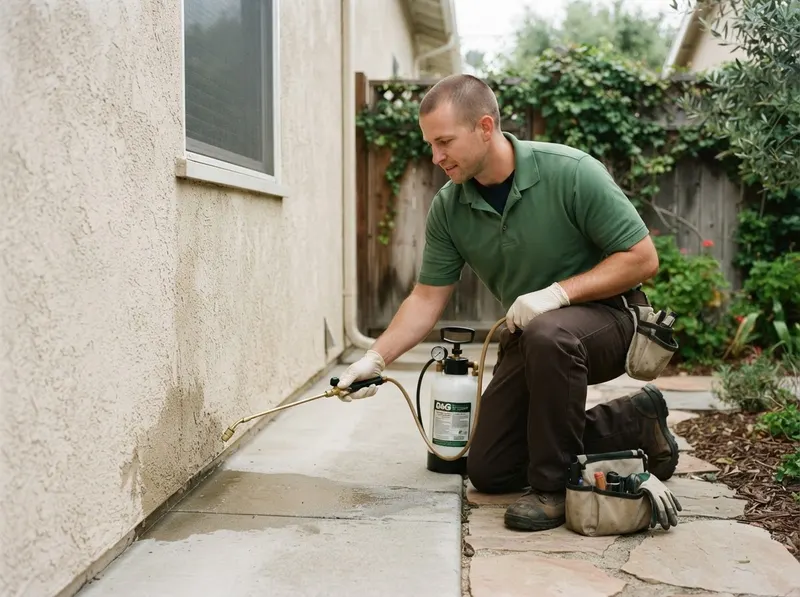
Systematic suppression of supercolony networks endemic to Westside clay soils. Exterior boundary defense utilizes slow-acting non-repellent formulations that foraging workers transfer back to multiple subterranean queens, dismantling the nesting complex. Foundation zones, weep screeds, and expansion joints are systematically treated to stop trailing across interior flooring and counters. Repellent barrier sprays cause colony budding and structural scattering; non-repellent liquid micro-encapsulates remain undetectable to worker ants, allowing uninterrupted trophallaxis throughout deep underground galleries beneath driveways and foundation slabs. Field technicians apply specialized granular baits along landscape beds and irrigation manifolds where Argentine ants pasture aphids and scale insects. This multi-zone barrier protocol decouples exterior colonies from home perimeters, protecting kitchens, slab joints, and interior wall framing throughout hot summer dry spells.
Get a quote →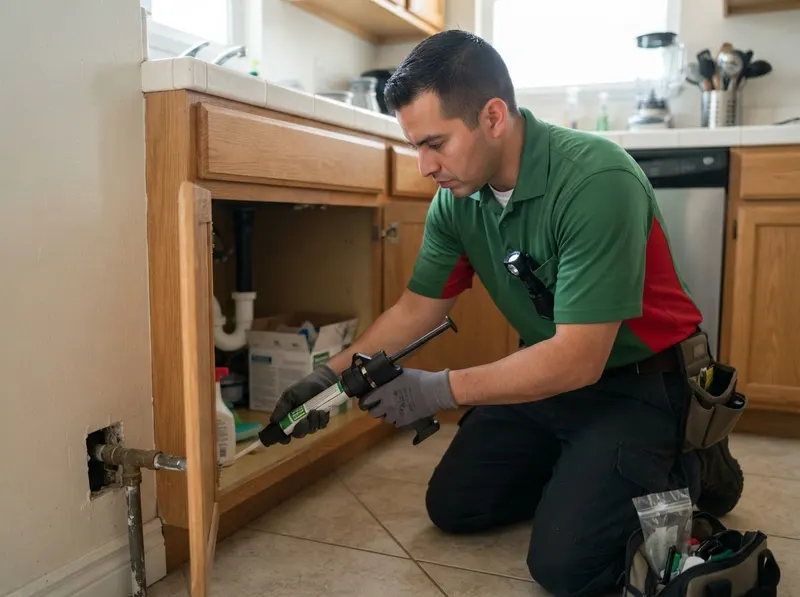
Aggressive eradication protocols engineered for German cockroaches in multi-unit structures and American cockroaches originating in municipal sewer junctions. Work involves precise crack-and-crevice bait placements, insect growth regulators that halt reproduction cycles, and targeted desiccant dust applications inside dry plumbing walls and electrical void channels. Cockroach aggregations within appliance motor housings, under-sink utility chases, and drop ceiling assemblies are physically flushed and extracted using HEPA-filtered vacuum equipment to lower allergen burdens immediately. Residual insect growth regulators disrupt chitin synthesis, rendering nymphal stages sterile and halting generational cycles within forty-eight hours. Perimeter inspection identifies fractured sewer access lines, floor drain traps with broken water seals, and damaged plumbing escutcheon plates that allow nocturnal migrations from city sewer mains directly into commercial kitchens or residential bathrooms.
Get a quote →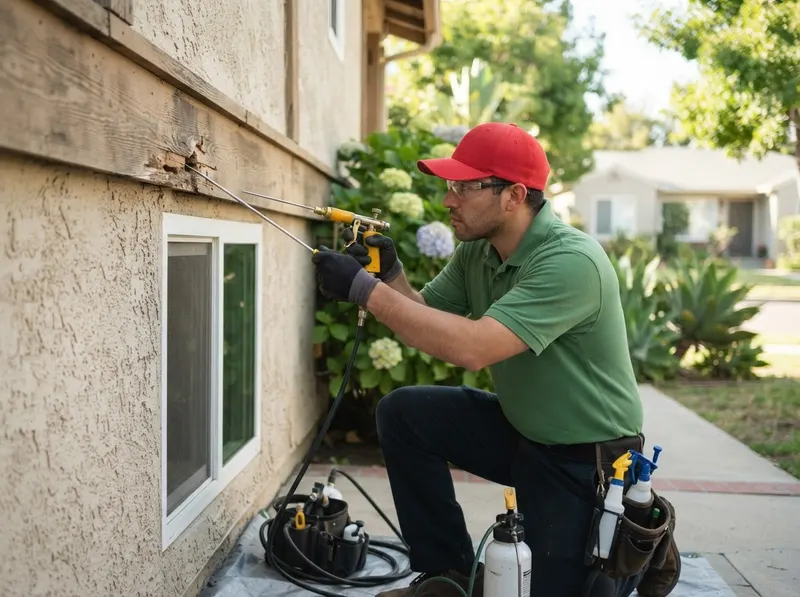
Direct wood injection and precision surface penetrant applications targeting localized drywood termite colonies inside structural timbers, fascia boards, and exposed framing. Electronic acoustic detection and scope verification confirm colony boundaries, allowing focused elimination without vacating the structure, preserving original architectural woodwork. High-pressure timber injectors deliver liquid or expanding foam borate formulations directly into active termite kick-out galleries, saturating the interior wood grain to kill feeding workers and reproductive nymphs on contact. Technicians apply structural wood preservatives containing disodium octaborate tetrahydrate to untreated structural rafters, subflooring joists, and open attic trusses to prevent future swarmer re-infestation. Clean-out services capture hexagonal fecal pellets and seal exit holes with non-shrinking structural wood putty to ensure monitoring accuracy during mandatory post-treatment evaluations.
Get a quote →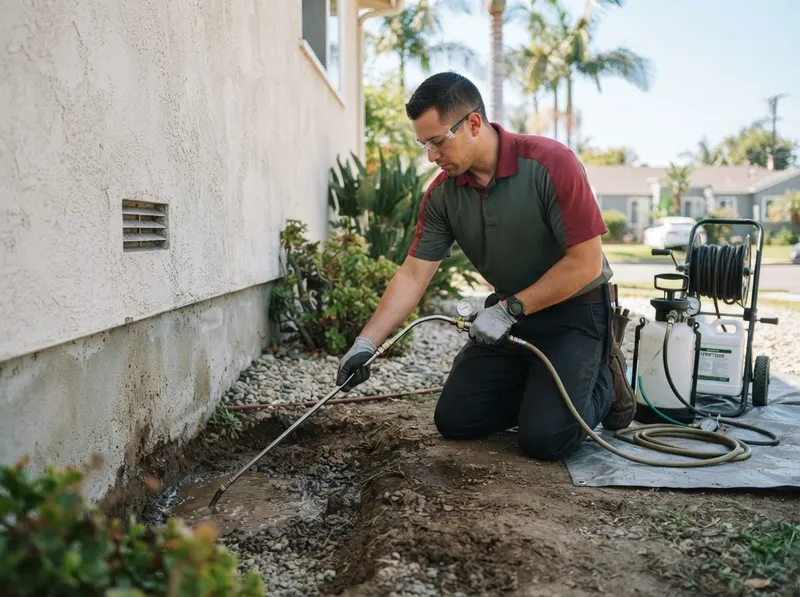
Creation of continuous liquid barrier zones along concrete stem walls, foundation footings, and sub-slab conduits. Trenching and pressure-injection methods saturate perimeter soil to neutralize subterranean colonies foraging upward from regional groundwater tables, protecting floor joists and load-bearing sill plates from catastrophic fiber consumption. Technicians excavate continuous trenches measuring six inches wide by six inches deep along exterior foundation perimeters, applying termiticide mixtures at calibrated label volumes of four gallons per ten linear feet per foot of depth. Where concrete flatwork, garage slabs, or brick patios abut exterior walls, precision rotary hammer drills bore half-inch injection ports spaced twelve inches apart to reach underlying soil matrices. Pressurized injection tools distribute non-repellent termiticide beneath structural slabs, sealing subterranean mud tube passages and terminating active foraging colonies before they breach wood framing.
Get a quote →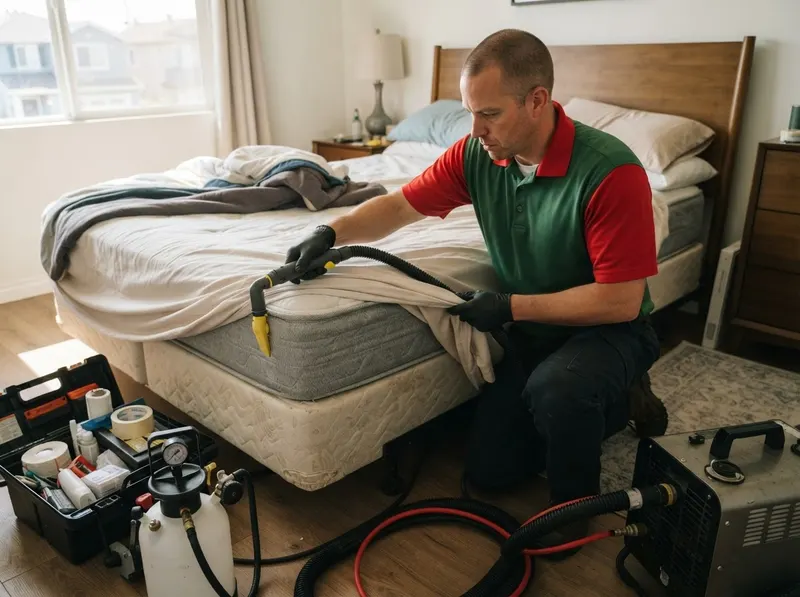
Multi-stage containment and elimination of bed bug life stages across mattresses, baseboards, electrical outlets, and wall voids. Technicians apply targeted high-temperature heat containment paired with residual contact agents, eradicating nymphs and eggs in a single cycle while preserving tenant possessions and interior finishes. Specialized industrial heating units raise structural ambient air temperatures between 120°F and 135°F, sustaining lethal heat thresholds that denature insect proteins across deep mattress seams, hollow headboards, and structural carpet perimeters. Concurrently, technicians deploy amorphous silica dust into electrical faceplates, crown moldings, and structural floor expansion gaps to form a lethal desiccant perimeter that lasts for months. Post-remediation scope inspections verify zero insect survivorship across furniture seams, upholstery folds, and adjacent baseboards.
Get a quote →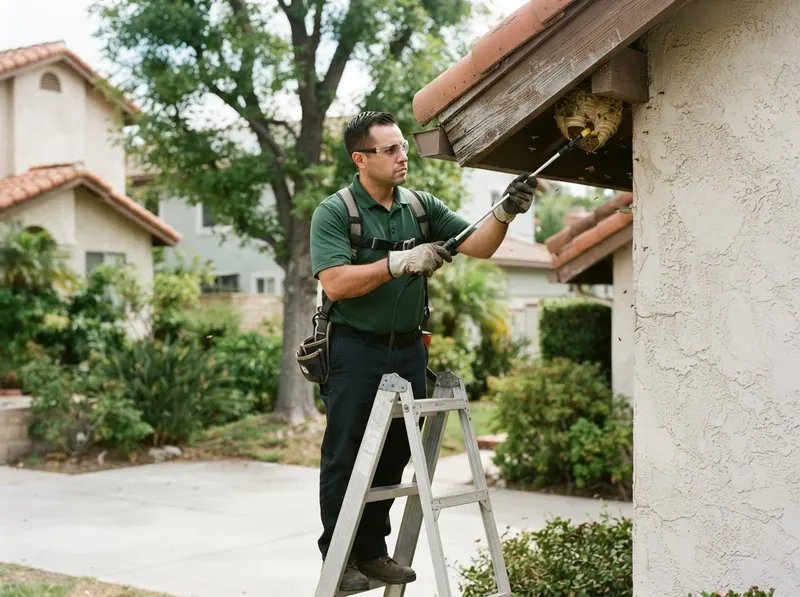
Defensive elimination and physical removal of aerial wasp nests, yellowjacket subterranean burrows, and invasive honeybee swarms lodged in exterior wall cavities or attic overhangs. Structural void access points are extracted, sanitized, and sealed with hardware cloth to deter scout insects from establishing secondary hives. Specialized knockdown applications neutralize defensive paper wasp nests under eaves, rafters, and deck railings, allowing physical scraping and power-washing of residual pheromone anchoring points. For subterranean yellowjacket cavities common in landscaped slopes, direct injection delivers micro-encapsulated formulations into underground nesting chambers, preventing defensive swarming and eliminating aggressive foraging workers. Structural bee removal involves opening compromised exterior siding, extracting wax comb networks, applying antimicrobial biocides to prevent fermentation rot, and securing framing voids against opportunistic future scouts.
Get a quote →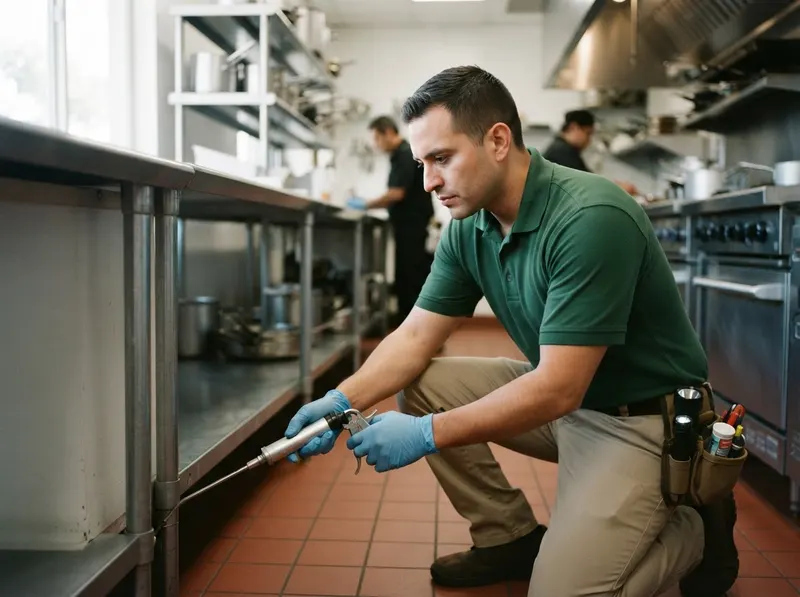
Rigid regulatory pest defense customized for restaurants, commissary spaces, and food production facilities. Service incorporates bar-code monitored bait stations, drain biocide foams, mechanical door sweeps, and night-cycle void treatments designed to surpass Los Angeles County Department of Public Health environmental standards. Technicians apply specialized enzyme-based bio-foams to organic sludge accumulation inside commercial floor sinks, beverage discharge lines, and grease trap perimeters to eradicate fly breeding substrates. Electronic pest monitors document pest capture activity across prep lines, dry storage racks, and dishwashing rooms, generating digital audit trails required by commercial health authorities. Structural sealing repairs deteriorating quarry tile grout lines, installs heavy-duty stainless-steel door brush sweeps along loading docks, and closes utility chases that allow nocturnal pest migration between tenant spaces.
Get a quote →You get a firm, itemized quote for your pest control service before any work begins, no surprises, no pressure.
Careful prep, tidy work, and a full cleanup when we are done. We treat your home and belongings like our own.
The same trusted, background-checked team from the first call to the final check.
Selecting structural pest remediation depends on the biological vector, nesting depth, and architecture of the building. If a property experiences attic scratching, masticated insulation, or droppings, choose mechanical rodent exclusion and biocide sanitation. If worker trails appear around slab foundations and kitchen plumbing, choose micro-encapsulated non-repellent perimeter applications.
If wood members show frass pellets or swarmers emerge from framing, choose localized structural injection or whole-structure thermal treatments. The operational trade-off centers on upfront mechanical sealing costs versus recurrent seasonal treatments: chemical applications suppress active surface populations rapidly at lower initial expense, whereas physical exclusion requires intensive structural installation to stop pest migrations permanently along common riparian corridors like the Ballona Creek watershed. When choosing whole-structure fumigation versus targeted localized wood injection, localized treatment minimizes chemical displacement and preserves historic interior finishes in mid-century plaster framing, but it requires periodic scope monitoring across structural timber joints.
Whole-structure fumigation addresses inaccessible wall framing completely in a single structural cycle, yet it incurs temporary resident relocation, gas clearance delays, and plant protection expenses. For subterranean termite management, trenching concrete perimeters delivers a five-to-ten-year soil barrier against subterranean groundwater colonies, whereas localized bait stations reduce soil disturbance along decorative flagstone walkways but require quarterly structural monitoring to confirm colony consumption rates. Property owners must weigh structural longevity, physical installation disruption, and material warranties before executing mechanical or chemical defense programs.
Every project gets a firm, written price after a free on-site visit. Ranges below for orientation.
Tell us about your pest control service job and we'll send a clear, written quote, usually the same day. Or just call and talk to a real Culver City pro.
(209) 209-6294
Properties bordering the Ballona Creek Bike Path, Veterans Memorial Park, and the Baldwin Hills Scenic Overlook experience intense rodent and insect pressure driven by seasonal elevation shifts and riparian ground activity. The high concentration of mid-century raised-foundation bungalows in Carlson Park and Sunkist Park requires precise subfloor crawl space barrier defenses to stop subterranean termites and foraging roof rats. In commercial and dense mixed-use zones near Sony Pictures Studios and The Culver Steps, municipal infrastructure work regularly forces sewer-dwelling American cockroaches and field mice into adjacent wall cavities, necessitating mechanical exterior exclusions. Soil composition throughout Culver City shifts rapidly from dense coastal clays along Culver West to sandy alluvial loam closer to the Baldwin Hills foothills. These shifting ground profiles create settling fissures along residential slab footings and foundation stem walls, granting subterranean termite foragers and Argentine ant supercolonies uninhibited conduits into interior framing. Historic developments built along Lucerne-Higuera and McManus feature dense structural wood framing and older exterior stucco assemblies that readily harbor drywood termite colonies, which thrive under dry coastal Westside autumn heat winds. In Fox Hills, multi-family apartment communities with shared structural utility tunnels require coordinated commercial baiting arrays and plumbing chase exclusions to halt German cockroach dispersal between tenant residences.
Free estimates for Culver City & the surrounding area.
 PestFence Pest Control